


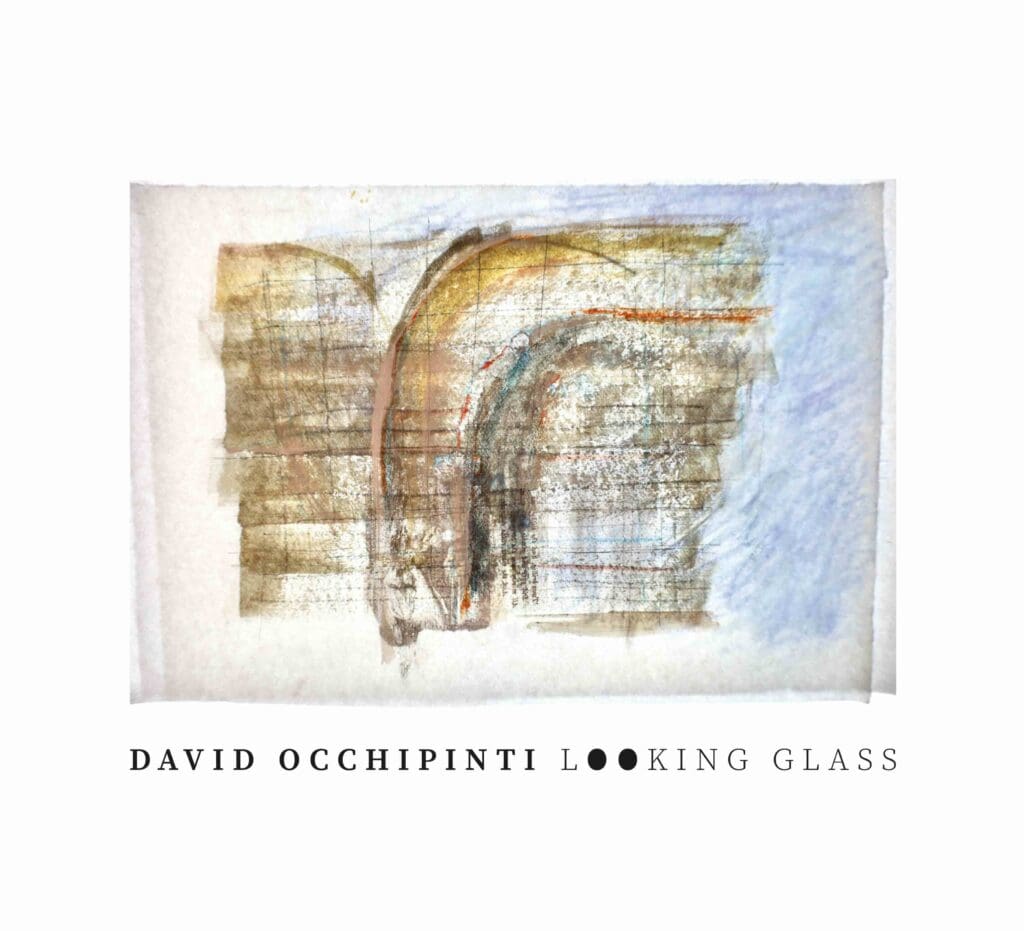
David Occhipinti // Looking Glass (ER 027)
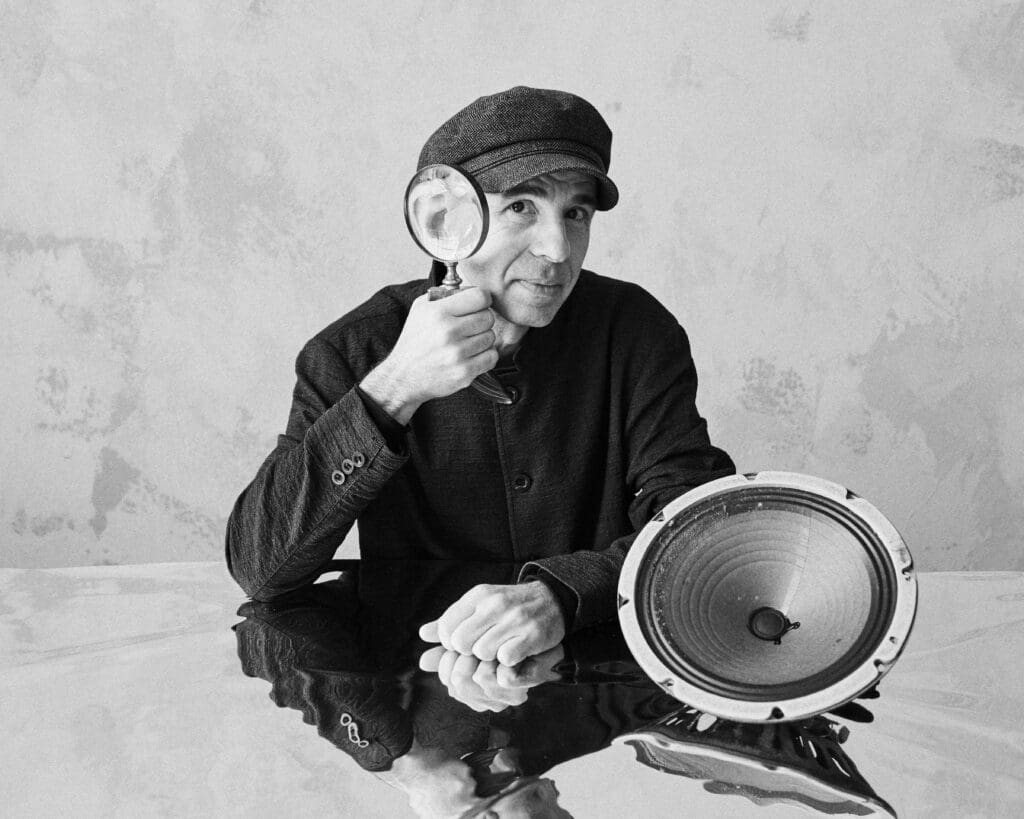
David Occhipinti // guitar & compositions
Aline Homzy // violin
Steven Dann // viola
Maria Zachariadou // cello
Featuring:
Beverley Johnston // vibraphone, crotales (08)
Alex Hetherington // mezzo-soprano (9, 11)
Charlotte Mundy // soprano (10)
Canadian guitarist and composer David Occhipinti may have ostensible roots in jazz but even as early as his self-titled 1997 debut, he has demonstrated a penchant for detailed writing that employs oblique harmonies, while excavating unconventional timbres from his instrument.
Since that time, Occhipinti has moved progressively away from genre-segregated convention to embrace a singular pluralism that gestures toward several styles without comfortably settling into any. His 2012 release Camera unveiled the Camera Ensemble, featuring a varied cast of collaborators, many of whom are equally adept at interpreting his intricate scores and improvisation. Last year’s Camera Lucida elaborated further on this methodology, but between those albums he put out These Out of Infnite (2019). Its release on the Canadian Music’s Centrediscs imprint is telling as the album showcases his growing body of vocal and chamber music with performances from the likes of Carla Huhtanen, Mingjia Chen, Robin Dann and Alex Hetherington the last of whom appears on the present collection.
The new release in question, Looking Glass—out June 12th on Elastic Recordings—continues along a similar trajectory to this 2019 disc, orbiting the concentrated core instrumentation of string trio plus guitar.
The album opens withSix Bagatelles, a set that’s as diverse as it is compact, clocking in at just shy of seven minutes. Each individual piece boasts a taut form paired with formidable colouristic imagination. The first bagatelle is somewhat of an aberration, alternating jagged unisons and conversational counterpoint. The second places quietly insistent pulses in the lower register of the cello for most of its duration, atop which Occhipinti, and later the remaining bowed strings, unfold dreamy chromatic lyricism. The briefest and most harmonically transparent movement follows. Anchored by percussive scratching from the viola and sweeping autoharp from Occhipinti, the violin and cello trace weightless melodic arcs that are tied together with a contoured guitar figure at the piece’s conclusion. The ensuing pieces continue to present compelling orchestration in bite-size morsels—melodic guitar harmonics highlighted with bowed unisons, pizzicati that accompany legato guitar swells, and even warm, atmospheric overdriven tones matched with assertive marcati.
Occhipinti’s ensemble includes his long-time collaborators Aline Homzy (violin) and Steven Dann (viola), bringing Swedish cellist Maria Zachariadou into the fold for the first time. She and Occhipinti met in 2010 at the Banff Centre and demoed some of the material that would subsequently emerge on Camera. Shortly after they met, she began playing with the London Philharmonia before assuming her current role as Associate Principal Cellist with the BBC Philharmonic. She generously few over from the UK to participate in these sessions.
The thirteen and a half-minute Lewis Carroll paean, Frumious Bandersnatch, follows the bagatelles and offers a more extensive exploration of that same instrumentation’s various possibilities. Its witty, episodic nature and knotty harmonic language might trace faint connections to the early 20th century, but there’s a crucial difference that shatters this resemblance altogether. This work serves to showcase an inventive customization Occhipinti has made to his guitar that expands thepiece’s colour palette well beyond the expected confnes of the instruments employed. The guitarist had his luthier Doug Harrison install a pickup above the instrument’s nut granting him access to the pitches found above his left hand’s fingered notes in addition to the conventional set—giving him up to twelve simultaneous notes. Occhipinti routes this extra pickup to a separate amplifier, reinforcing their mirror-image relationship through stereo separation, while offering these unusual microtonal hues their own distinct space. “I have felt a bit like Alice going through the Looking Glass and discovering things that were nearby, yet outside the realm of our everyday realities,” he remarks, tying his choice of title (from the Jabberwocky) to the material. Occhipinti pushes the peculiar palette of this piece even further by employing more pronounced effect processing at various points throughout.
The latter portion of the album sees various guests joining the strings and guitar. Renowned percussionist Beverley Johnston (who was recently recognized as an Officer of the Order of Canada) is another frequent collaborator of the composer and her vibraphone, glockenspiel, and crotales add a glistening timbral veneer on the brief but luminous Sonyshnyky (Sunfowers), which honours the plight and resilience of Ukrainians. The aforementioned mezzo soprano Alex Hetherington—a staple of Canadian Opera Company, Vancouver Opera, and a past soloist with the National Arts Orchestra—features on two cuts starting with the warm, heartfelt Sotto le Stelle. The vocal writing on this tribute to Occhipinti’s step-mother, Maria seems to perfectly inhabit the singer’s body, and Occhipinti’s use of nylon string guitar only imbues the piece with further intimacy. Hetherington’s later appearance onYou Stepped Out is far more playful, her broad, quasi-operatic delivery generating an absurd friction with the text and collage-like patchwork of the other parts (which includes throat-clearing, musical quotations and a Victrola obligato.) Soprano Charlotte Mundy sings on the similarly mischievous penultimate work, Who’s your dada? Collaborator to everyone from the TAK Ensemble to Liturgy, Bekah Simms to Eluvium, Mundy brings her characteristic lucid agility to this performance, which employs the word “dada” as its only lyric over spritely and colourful ensemble writing.
With Looking Glass, listeners continue to witness the development of David Occhipinti’s inquisitive compositional disposition and the crisp, evocative musicianship he and his close collaborators have cultivated. The recording traverses considerable emotional and aesthetic terrain, while including the contributions of various invitees, but Occhipinti’s distinctive and affable sonic personality produces cohesion throughout, making for a listen that engages and engrosses.
-Nick Storring, Riparian Media